-Tanushka chakraborty
So till now, we have basically ticked all of the boxes, whether it be the big crunch, the big freeze or the big rip. There’s another theory that starts out with ‘big’ in the name i.e the big bounce theory.
The big bounce theory approaches a fascinating twist to this story as it hypothesizes that maybe the universe has neither beginning nor end. According to this hypothesis, the big bang was in fact a ‘big bounce’, which connects the previous universe to the current one and will keep ongoing like this. Although it may be possible that this ‘bounce’ was merely a one time event or it could be functioning in a cyclical manner without any fixed beginning or end.

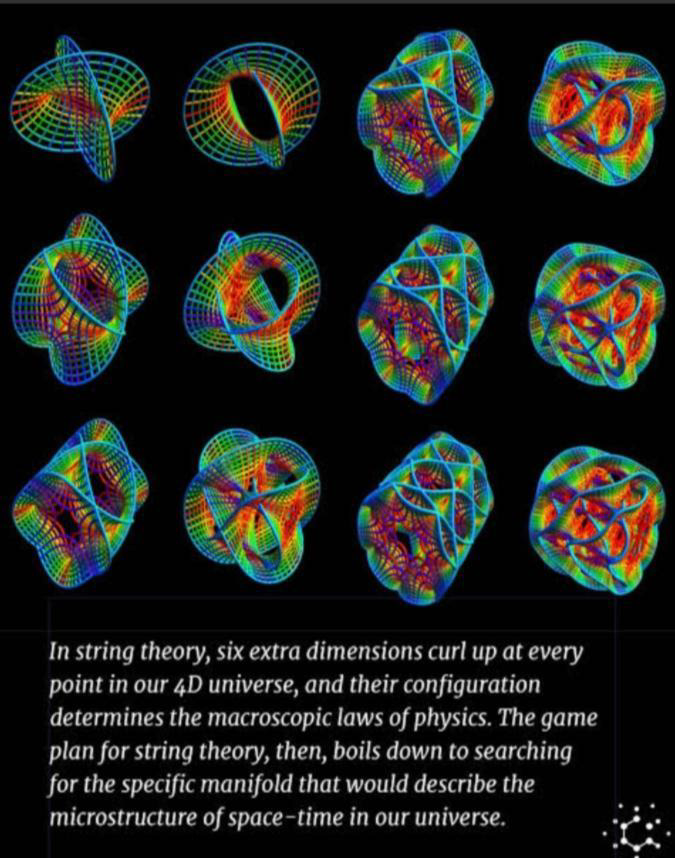
Particularly this theory/ hypothesis has close connections to string theory. String theory itself is a pretty vast concept so it’s pretty much impossible to go beyond scratching the surface in this blog. It’s often said that string theory connects both general relativity and quantum mechanics. In a nutshell, in theoretical physics, string theory suggests that the universe is actually made of infinitesimally tiny strings which connect each other like a framework; these strings are smaller than atoms or even quarks. It’s a pretty famous theory in theoretical physics but it can’t be really experimented on, which may voice opposing views from physicists. So back to the point, how does the big bounce connect to string theory?
The string theory consists of a string length which is thought to be regularising the singularities of the big bang. This means that the beginning of time can’t be credited to the big bang but instead, it’s a transition phase between the pre-Big Bang collapse up to the current expansion
To clear it up a bit, let’s ask this very fundamental question, why is the universe so homogeneous? This invokes the need of inflation as practically, a particle is only able to travel a finite distance but this seemingly homogenous universe seems to be expanding infinitely. This would conclude that particles from different regions may have never been in contact with each other so why does the homogeneity persist? The homogeneity here refers to similar energy density and temperature. Along with that, it’s also observed that the universe is ‘flat’ which means that the decaying of spatial curvature is quite slow when compared to the overall matter energy density (which is homogeneous) so with that being said, according to cosmology, accelerated expansion (inflation) is the answer to these fundamental questions. This acceleration which may have been started in the early stages, which would mean that the curvature may have been almost comparable to the energy density but its value was drastically decreased due to the inflationary phase. And the regions may have been stretched due to this accelerated expansion (inflation) causing homogeneity in the universe, which circles back to string theory.
As string theory regularises the singularities, it paves a way for the possibility of the big bounce theory as this would mean that there was a pre-big bang phase as well, which could even be the previous universe.
Now, like every other hypothesis, this one also has a fair share of inconsistencies as well.
● One of them being that, the universe is constantly expanding with increased acceleration due to dark energy (you can check out the short explanation in part 3 – Vacuum Decay) as according to the big bounce model, it requires de-acceleration and reversing into the Big Crunch (also explained in part 2 : The Big Crunch) due to gravity which would then bounce back into a new big bang this creating a new universe, yet the expanding universe is not de-accelerating in any way
● According to the 2nd law of Thermodynamics, the entropy is constantly increasing with the expansion of the universe, but the big bounce requires the entropy to decrease which isn’t possible as per the 2nd law.
● The main aim for this theory is to avoid the singularity of the Big Bang but other theories such as loop quantum gravity (LQG) suggest ways which avoid the bouncing back of the universe.
● There’s a huge lack of any formidable evidence and merely remains in the theatrical domain as experiments aren’t possible.
So with this we conclude the ‘Theorised Endings to the universe’ series, hope y’all had fun reading this series of 5 parts and please continue to look forward to the next exciting series.
 Orbital Infinity
Leave a comment