The History of Space Exploration:-
This the 2nd part of the series of the history of space exploration. In the first part we talked about how the well known “Cold War” between two superpowers of the 20th century, USA and USSR fought for dominance and to prove to the world who between them was better. (Check it out if you haven’t already : https://orbitalinfinity.com/2025/10/29/the-history-of-space-exploration/)
Space became an integral part of that war, and surprisingly war gave birth to new technologies pushing us humans to our limits and surpassing them in the case of our imagination and fascination about space.
Now, in this part let’s get to know how did Space Exploration move ahead :-
9) Saluting the Salyut-1 :-
Salyut – 1 was the first space station ever to be launched in Earth’s Orbit. A feat achieved by the Soviet Union by launching it on 19th April 1971. Salyut – 1 laid the foundations for upcoming space station ideas and also for the ISS. Its main goal was to check if it is possible for astronauts to live in space. It was a success, it surely was possible for humans to live in space with proper equipment.
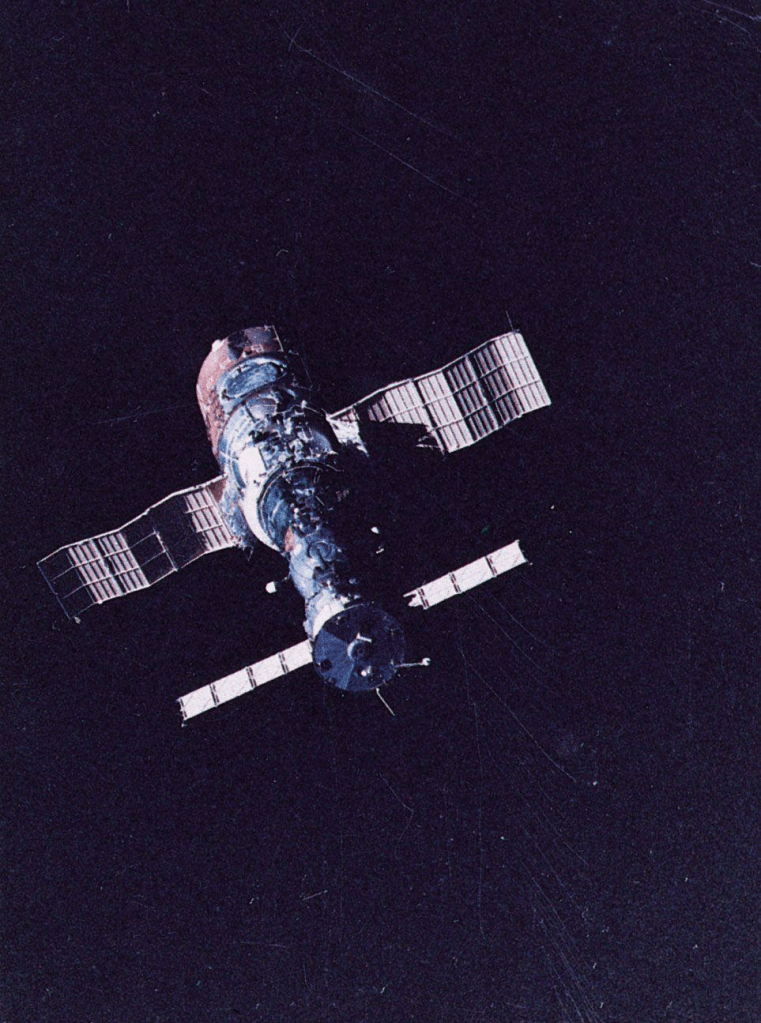
Salyute-1 during its orbit around the Earth.
Only 2 missions were ever sent to it, the first being Soyuz 10, which failed due Soyuz 10 unable to dock to Salyut-1. On the other hand the next mission Soyuz-11 successfully docked and the crew stayed for 23 days in space. Though the crew of Soyuz 11 never returned alive it paved a way for what was to come.
Unlike today’s ISS, Salyut-1 was a single stage space station meaning it needed to be launched only once into space. It orbited around the earth at a distance of ~220km above earth, until its de-orbitation day dated 11th October 1971.
10) Rover to the Moon :-
Rovers were set to be the next big things in the Space Race, where they would be launched to designated celestial bodies. Upon reaching there the rover could move like a four wheeler and using sophisticated technology could tell about the composition of soil and minerals available on the body.
And again it was the Soviets who were the first to do it. They sent Lunokhod-1 a rover on the Moon. The rocket launch was conducted on 10th November 1970 and it landed on the Moon a week later on 17th November.
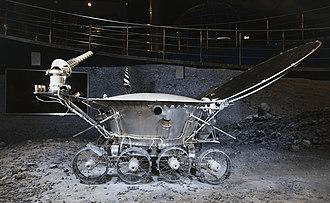
Lunokhod-1, another sign of USSR research capabilities, and inspiration for many upcoming rovers after its time.
Its success demonstrated that it was not needed for humans to always go, and collect samples from the surface of designated bodies. Its success was the stepping stone for many upcoming rovers, especially to Mars.
Lunokhod-1 conducted research of Lunar Soil and gave photos and datas which were way ahead of its time. Its work came to an end on 14th September 1971, making it work on the lunar surface for almost 10.5 months.
11) Wanderers of Space :-
The farthest man-made objects are Voyager 1 and Voyager 2, launched by the USA to study the outer planets of our Solar System. A rare planetary alignment which was bound to happen would reduce the dependency on fuel by using gravity assist maneuvers.
Voyager 2 launched on 20th August 1977, was the first of the two to be launched. Voyager 1 was launched a fortnight on 5th September 1977. Initially only planned to do a flyby of Jupiter and Saturn, their overwhelming success led to the mission being expanded to do a flyby of Uranus and Neptune too, a feat not achieved before.
Voyager-1 and Voyager-2, the brothers of interstellar space.
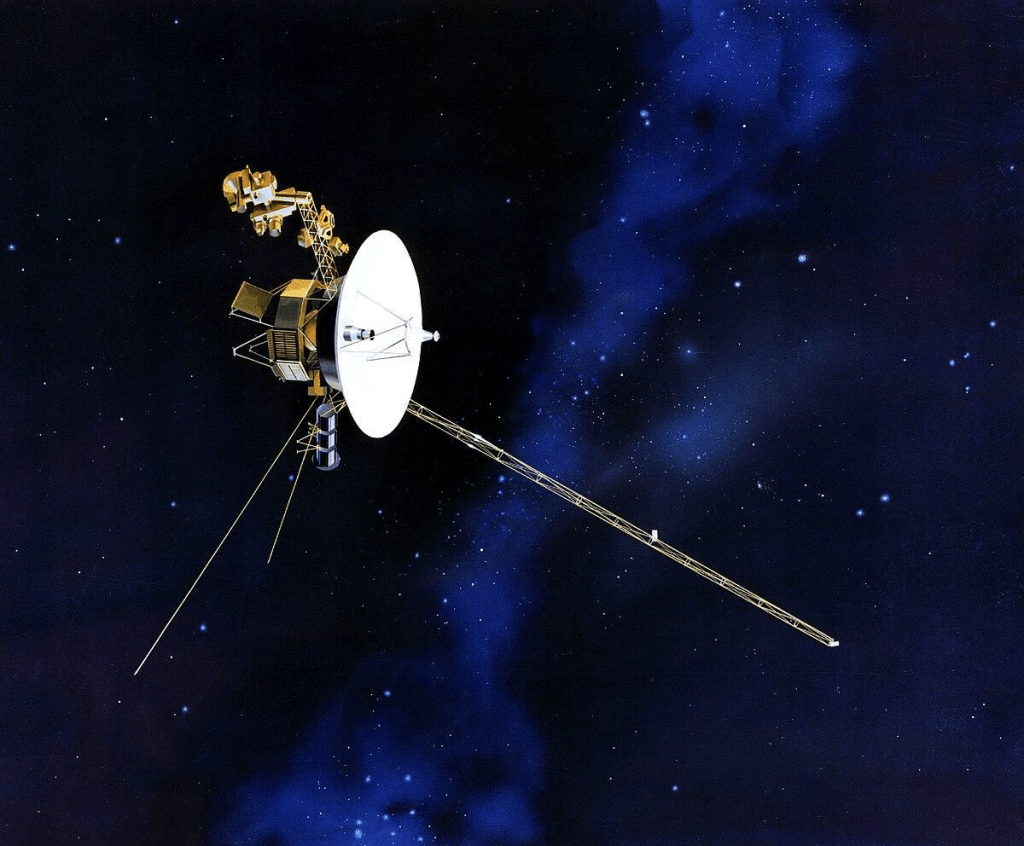
Voyager-1 and Voyager-2, the brothers of interstellar space.
Soon after, they were sent deep in space away from our Sun, to explore the area surrounding our Solar System and to see what lies beyond it.
Voyager 1 and 2 carried various details about us and our planet which could help anyone who found them locate us. It carried various things like, saying Hello in 55
different languages, photos of humans, animals, various sounds and some of our discoveries in various fields of Science.
Currently the farthest man-made objects, they travel around the space at a jaw dropping speed of about 61,500km/hr (Voyager 1) and 55,000km/hr (Voyager 2).
12) Reusable Space Craft:-
Launching Rockets was already a tough thing, but a small failure and it would be entirely destroyed. Plus the making of more and more rockets was taking a heavy toll on budgets of Space Companies. Reusability was the only way to stop this much spending.
First Reusable Rocket launched was NASA’s Space Shuttle. It could carry satellites to the space and come back to Earth and land like an aeroplane making it easy to reuse.
A day to remember, a moment to remember, a moment which inspired space giants like SpaceX
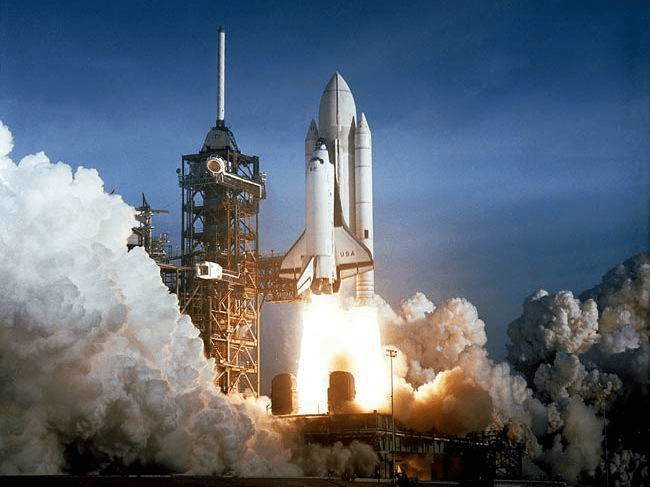
A day to remember, a moment to remember, a moment which inspired space giants like SpaceX.
Its reusability was up to the extend where even the Rocket Boosters could be reused after locating and picking them up from the sea.
The very first thing it changed was that for every launch a new rocket need not be used which cut the costs which could be used for later missions. The debris gathering in space could also be reduced dramatically if we could just reuse the rocket.
It was done on 12h April 1981 by USA at the Kennedy Space Centre.
13) Hubble Telescope :-
Discoveries about Space, and no Hubble Telescope is like trying to make potato chips but without potatoes. The most famous space observed telescope, the Hubble Telescope was launched by USA to study deep space but from space.
Hubble was created to fulfill this exact dream. Launched on 24th April 1990, it was day history was meant to be created. Originally only meant to be in service for 15 years, it’s been more than 35 years, and it yet is going strong, strong enough to compete with modern day telescopes like JWST upto a certain limit.
Some of its greatest discoveries are :-
● Pillars of Creation beautiful eye catching scene in Eagle Nebula.
● It confirmed the presence of Super Massive Black Holes at centre of Galaxies.
● It’s images have always helped to discover new Galaxies and planets.
Also, helped in finding some of the oldest galaxies also.
● Its deep field imaging used for discovering many new celestial bodies.
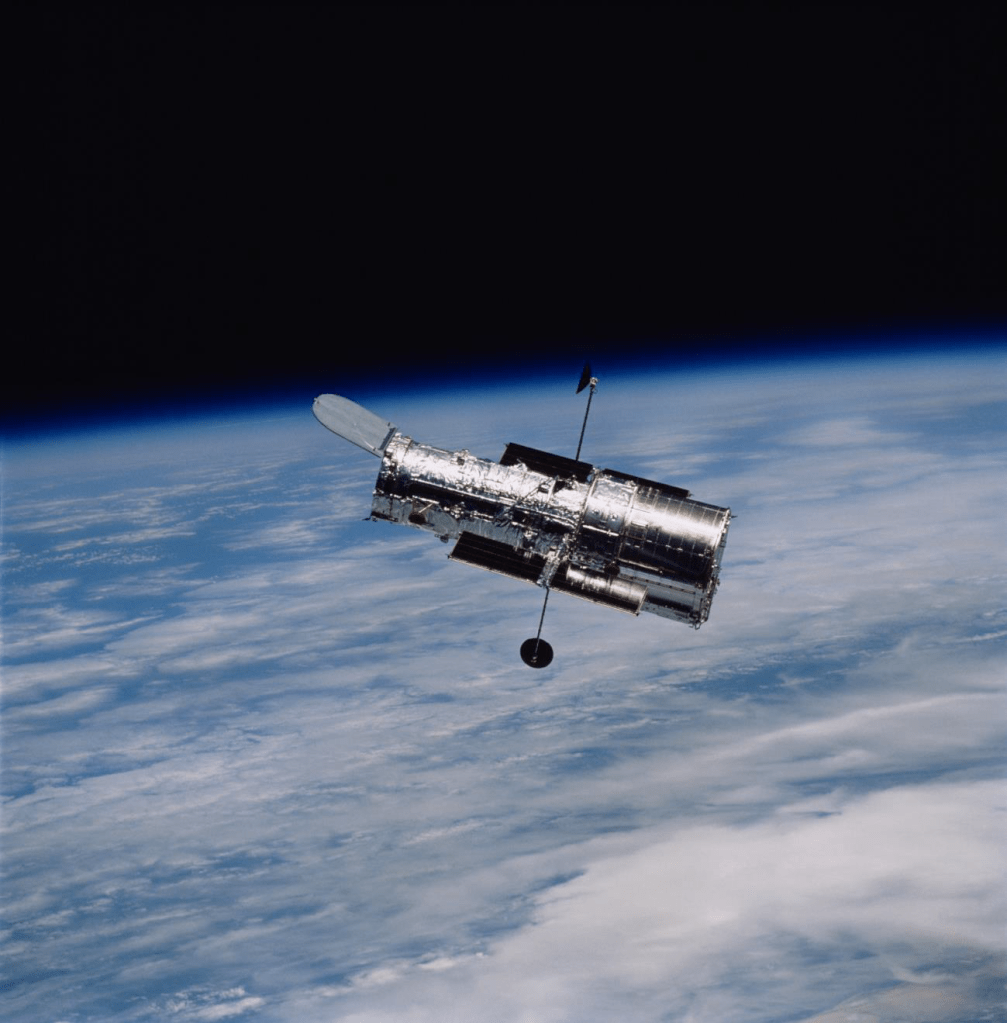
Hubble, the most successful space Telescope.
Space Exploration does not stop here, it takes us deeper into the unknown, there is still one of the most essential part yet to be discussed.
Two parts also can’t suffice the entire space exploration we have done.
So, let’s talk about it in our 3rd part.
Till the time, rein the horses of curiosity before they run free and keep reading…..
 Orbital Infinity
Leave a comment