Wars are no longer confined to land, sea, or air; the next battlefield lies beyond the horizon, in space. Today, war is not just about fighting on the ground but about the rapid rise of space warfare. But before we dive in, let’s ask the question: What is space warfare?
Space warfare is both fascinating and worrying. You can say it is the use of technology to inspect, interfere with, or attack systems connected to Earth from space. It represents a struggle for dominance in orbit where satellites, communications, and defense networks exist.
Impacts of Space Warfare on People
We can list its impacts in several ways:
● Disruption in Networking Services: Systems like navigation, GPS, communication networks, and even satellite-based data services such as Starlink could be severely disturbed.
● Economic Consequences: Disruptions in GPS and communication could slow down shipping, logistics, and trade, creating global economic instability.
● Repair Costs: Repairing or replacing satellites would be extremely expensive.
● Space Debris (Kessler Syndrome): Destroyed satellites generate debris that threatens other satellites and manned spacecraft, increasing risks for future missions.
● Public Fear and Uncertainty: The idea of space warfare can trigger fear of global conflict and technological vulnerability.
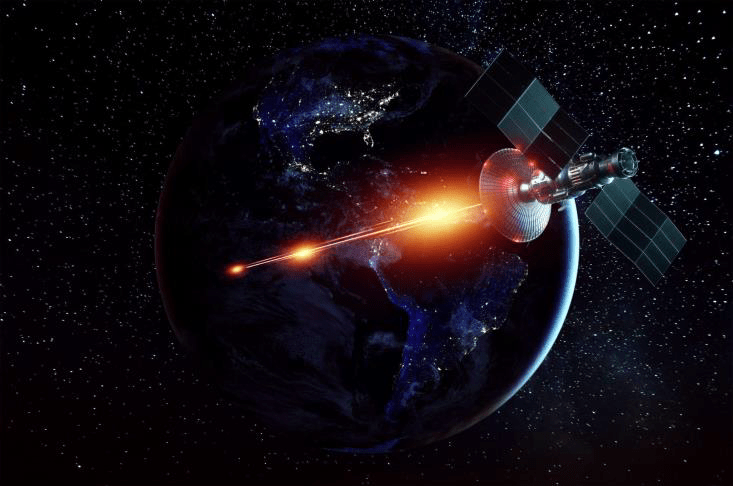
Beyond these, there are many unlisted issues and consequences of space warfare that the world may not yet be prepared for.
Countries Prepared for Space Warfare
To date, four countries seem prepared for space warfare: the USA, Russia, China, and India. Here are some missions that showcase their readiness and capabilities:
● USA: Has tested ASATs, operates large military satellite constellations, and possesses significant space defense and surveillance infrastructure

● Russia: Has a long history of ASAT tests, ground- and missile-based counterspace systems, and a strong military space program.
● China: Tested kinetic and non-kinetic ASAT weapons, including lasers, and has an advanced military and surveillance satellite network.
● India: Conducted its own ASAT test, Mission Shakti (2019), marking a major step in building military space capability.

Countries Developing Space Defense
Some nations are actively developing their space defense abilities:
● France: Has a Space Command and reconnaissance satellites; developing systems for active defense of its assets.
● United Kingdom: Established UK Space Command; investing in satellite protection and anti-laser defense technologies.
● Germany: Building radar reconnaissance satellites and expanding its defensive space capabilities.
● Japan: Operating dedicated military communication satellites and expanding cooperation with allies.
● South Korea: Developing secure military communication satellites and homegrown launch capabilities.
● Middle Eastern Nations (UAE, Saudi Arabia, Iran): Increasing investment in satellite technology and infrastructure, though not all have demonstrated full ASAT systems.
Is Space Warfare the Right Thing to Do?
While space warfare may offer temporary military advantages, it endangers the entire planet’s future.
What often goes unnoticed is the human side of space warfare, the psychological and ethical battlefield. Space dominance isn’t only about missiles or satellites; it’s about who controls the truth. The power to manage satellite networks means the power to shape what people see, hear, and believe. If a single nation could manipulate that flow of information, it wouldn’t just affect machines in orbit, it would touch lives on Earth, steering economies, altering decisions, and quietly influencing the thoughts of millions.
In the end, the real battle may not be fought among the stars, but within our minds.
 Orbital Infinity
Leave a comment