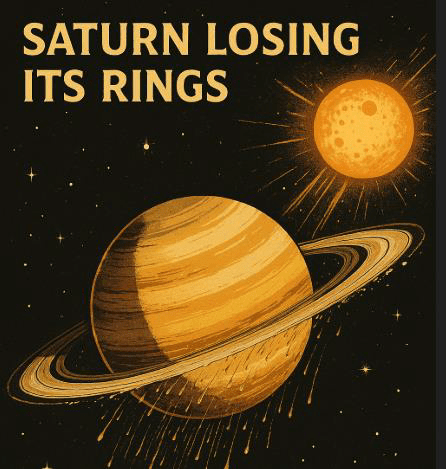
If I ask you to name a unique planet in our solar system by its shape, most of the answers will be Saturn. Why? Because of its rings—no other planet except Saturn in our solar system has its own ring system. But what would your reaction be if I told you that these magnificent rings you admire are soon going to disappear?
Yes, you heard me right—Saturn is losing its rings.
The question may arise in your mind: why is this happening?
With this blog on Saturn losing its rings, we expect you to learn new things, satisfy your curiosity on this topic, and, most importantly, enjoy the read.
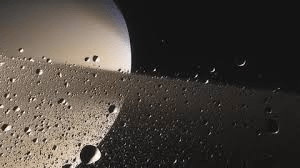
Let’s come back to the question. Saturn is losing its rings due to a process called ring rain. In simple terms, ring rain is defined as follows: Saturn’s rings are mostly made up of water and ice crystals, which are starting to vaporize due to the Sun and small meteors. But space is a vacuum—how can heat travel without any medium?
Here’s how: heat doesn’t travel, but radiation does. The UV radiation from the Sun melts and vaporizes the ice and water, which leads to the gradual disappearance of the rings.
The
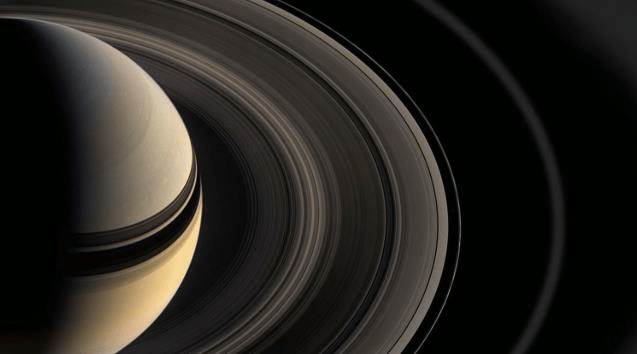
The approximate time it will take for the rings to disappear is 100 to 300 million years.
Some people say that it was a temporary disappearance in March 2025 due to a phenomenon that happens every 13 to 15 years. It occurs when the Earth passes through the ring plane.
Fun facts about the planets with rings
Not only Saturn, but planets like Jupiter, Neptune, and Uranus also have rings. The visibility of Saturn’s rings depends on the components they are made of. The rings of Jupiter, Neptune, and Uranus are usually made up of rocks and dust, which makes them harder for astronomers to observe through telescopes.
 Orbital Infinity
Leave a comment