Aurora
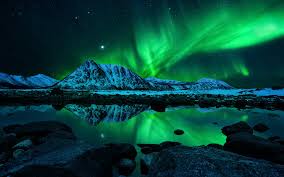
We all have seen auroras in real life or in pictures , you all would be thinking about the science behind this phenomenon. The topics covered in this blog are
1) Auroras
2) Types of Auroras
Auroras, also known as the Southern or Northern Lights, may look beautiful and fascinating — but in reality, they are created when high-velocity particles from the Sun collide with the neutral atoms in Earth’s atmosphere. This powerful crash releases energy, which appears to us as those beautiful, sparkling lights called auroras.
“aurora is actually the Earth’s sign of surviving sun’s deadly attacks”
But hey it is not as simple as you think let’s talk about how the solar flare is formed in the sun which hits the earth
Origin of the solar flare , as we all know that sun is like a dense cloud of hot gases and it has a complex magnetic field , it has intense pressure in it and when this pressure exceeds the limit it gets released from its surface forming solar flare
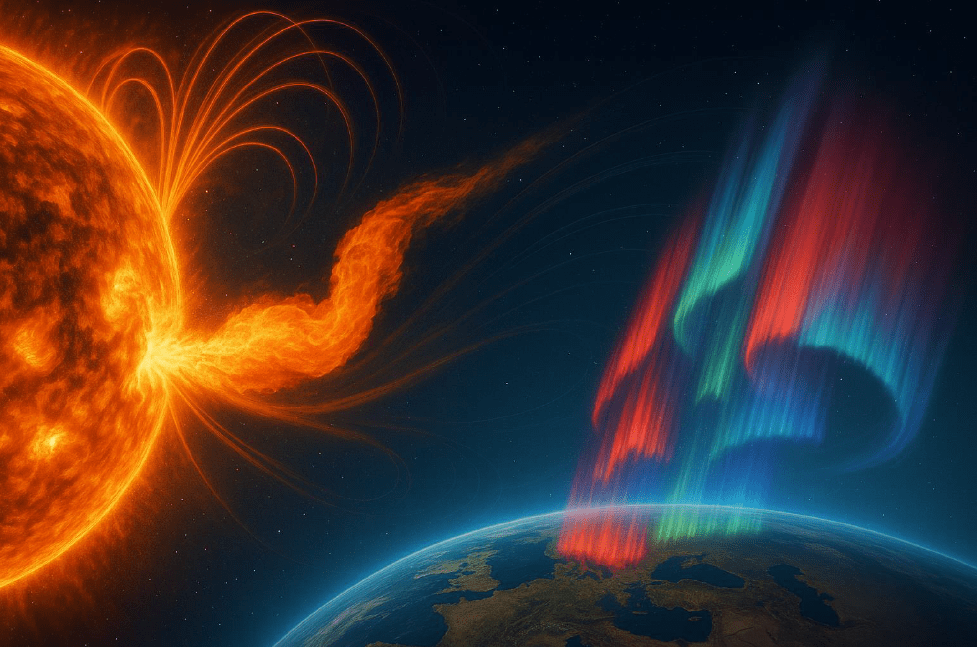
The earth has its own magnetic field and when the solar flare hits the earth that collision leaves a spark of light called auroras one of the reasons that Mars on the
present day is not habitable is that it has a very low magnetic field which makes it a non habitable planet.
They are of two types
1) Aurora Borealis in the Northern Hemisphere.
1) Aurora Australis in the Southern Hemisphere.
What do the colours of these auroras represent and how is it determined ?
We see different types of colours in auroras like green , pink ,red , blue/purple these color and determined on some factors some of them are altitude and the gas
Red : it shows that above 200 km from the surface of the earth the flare collides with the O2 molecules
Blue or purple : it is very rare colour and it occurs when geomagnetic storms Hits between 80 – 120 km
How does the collision lead to light?
You might be wondering — how does a simple collision create those glowing auroras? Well, here’s how it works. When the solar flare hits Earth’s atmosphere, the particles mainly collide with gases like oxygen and nitrogen. During this collision, energy gets transferred from one electron to another. But atoms can’t hold that extra energy forever! So, they return to their original state, called the de-excitation state, by releasing the extra energy they absorbed earlier — and that energy comes out in the form of light, which we see as auroras.
Fun fact about auroras
● The word aurora comes from the roman goddess of dawn.
● Sometimes the auroras make a crackling sound which is one of the rare events.
● They disturb satellites, radio signals and power grids too.
● The best time to see auroras is the winter season in the polar region or from September to March in the north pole.
 Orbital Infinity
Leave a comment