Dark Matter: Missing Mass of The Universe
Perhaps the most mysterious and elusive thing in our Universe is Dark Matter. It is a widely accepted hypothesis which has strong but indirect evidence to prove its existence.
What is Dark Matter ?
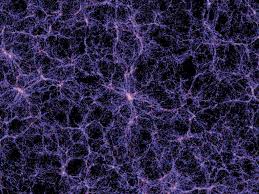
Dark Matter is a type of matter which is assumed to exist. It is said to contain 27% mass-energy content of that of our whole universe. In our universe dark matter makes up approximately 85% of the Total Matter, so, what’s the problem ?
The problem, no one has seen it. It’s elusive even to the most powerful telescopes. Gamma, X-ray, and even Infrared telescopes have been unable to detect the likes of Dark Matter. It thus brings us to our next question,
How do we know it exists ?
Recent studies of our own Galaxy and some closer ones report that our galaxies rotate at speeds at which it’s not possible for them to survive because their observable matter cannot hold them together, resulting, they should have torn themselves apart long ago.
Presence of Dark Matter can be attributed to Einstein’s Theory also, according to Einstein’s Theory, mass bends light. When this theory was applied to galaxies it was found that light was bent more than the requirement it fits for the mass. The more bending of light indicates more mass which has not been discovered. Thus, probing us in the direction of Dark Matter.
Additionally, when we observe the mass in Galaxy Clusters, the visible mass (stars & gases) don’t match with the results of Gravitational Effects.
What’s it
What’s it made up of ?
Let’s assume that Dark Matter is proven to be true in the upcoming future, what could it be made up of ?
1) WIMPs
Referring to Weakly Interacting Massive Particles, WIMPs is till date the most suitable candidate for what dark matter is made of. It is also a hypothesis, so not too much is known about it. But from what we know, they are weakly interacting particles which are massive in size, accounting for their mass unlike neutrinos and photons.
Some Major Experiments Conducted by Scientists to Detect WIMPs are :-
(A) Direct Detection:-
Experiments like XENONnT and PandaX which have large Xenon quantities to detect WIMPs bouncing off atomic nuclei. Such experiments are conducted many feet underground.
(B) Indirect Detection:-
Powerful telescopes are used to look for signals of WIMPs destroying each other and producing gamma rays. Until now both the researches have not yielded any positive results, but, the sensitivity of experiments have been increased.
2) Axions
Another strong competitor with WIMPs for what Dark Matter can be are the Axions. They too, like WIMPs, are hypothetical particles which are extremely light, electrically neutral and interact weakly with surroundings. Now, they might be tiny, but size is immaterial if you have enough of it. Their presence is hypothesised because of the fact that they have not been discovered, another factor making them a strong candidate for Dark Matter.

Notable Experiments Used Are:-
(A) ADMX:-
ADMX stands for Axion Dark Matter eXperiment. Located in University of Washington, USA, the goal of this experiment is to detect Axions by converting them into microwave photons under a strong magnetic field using inverse Primakoff Effect. It is currently operational and has set limits and constraints on the mass of Axions, in the range of micro-eV.
(B) ABRACADABRA (ya, it actually exists):-
Located in the Massachusetts Institute of Technology (MIT), USA, it aims to detect very low mass Axions which are in the nano-eV range. It uses a method involving a toroidal magnet (magnet shaped like a doughnut). A magnet is used as the idea is based on that Axions can convert into small oscillating magnetic fields in the presence of a strong magnet. It is currently operational but has not detected any Axions.
 Orbital Infinity
Leave a comment